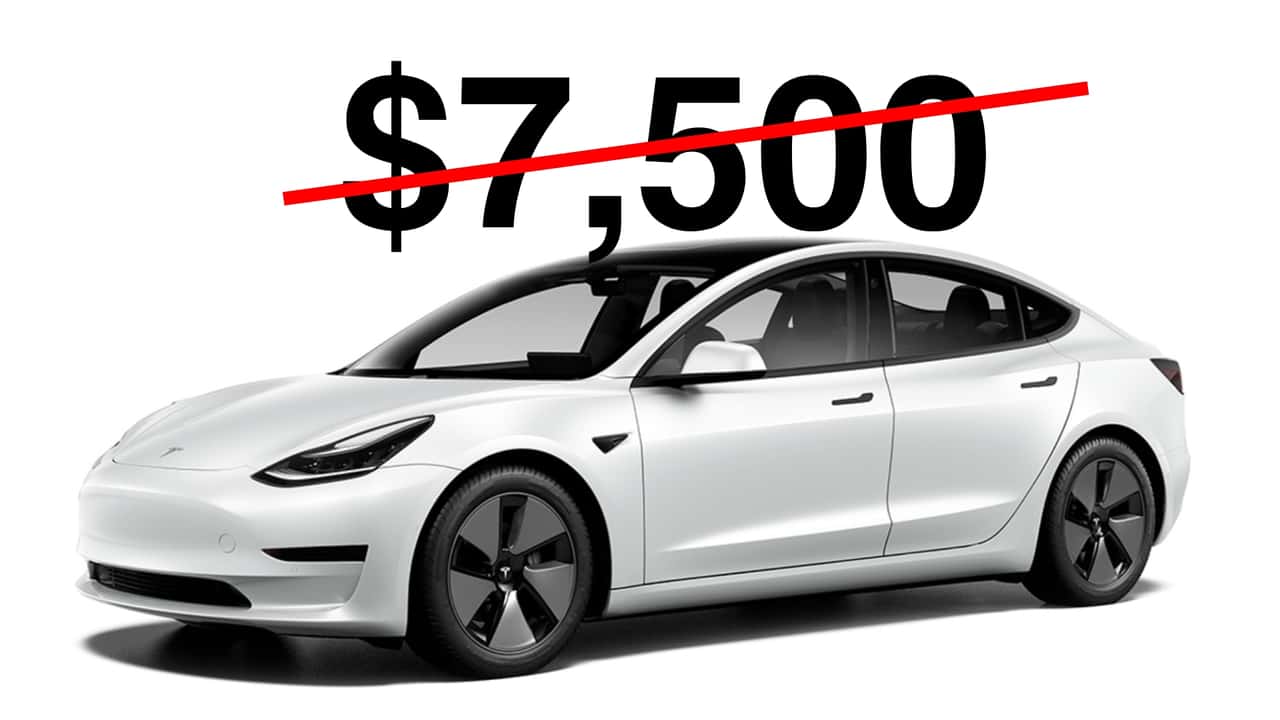
How to Claim the $7,500 EV Tax Credit If You Don’t Owe Taxes
The **7,500ElectricVehicle(EV)TaxCredit∗
∗isasignificantincentiveforAmericanstoswitchtocleaner,moresustainabletransportation.However,manypeoplewonderhowtoclaimthiscreditiftheydon’towetaxesorhavealowtaxliability.Thegoodnewsisthatrecentchangesunderthe∗
∗InflationReductionAct(IRA)∗
∗havemadeitpossibleformorepeopletobenefitfromthiscredit,eveniftheydon’towetaxes.Thisarticlewillguideyouthroughthestepstoclaimthe7,500ElectricVehicle(EV)TaxCredit∗
What Is the $7,500 EV Tax Credit?

The EV Tax Credit, formally known as the Clean Vehicle Credit, is a federal incentive designed to encourage the adoption of electric vehicles. It allows taxpayers to claim up to 7,500∗
∗forthepurchaseofanewelectricvehicleorupto∗∗7,500∗
∗forthepurchaseofanewelectricvehicleorupto∗
∗4,000 for a used EV, depending on the vehicle’s eligibility and the buyer’s income.
Key Changes Under the Inflation Reduction Act (IRA)

The Inflation Reduction Act (IRA), passed in August 2022, introduced several changes to the EV tax credit, making it more accessible:
- Income Limits:
- New EVs: 150,000forsinglefilers,150,000forsinglefilers,225,000 for heads of household, and $300,000 for joint filers.
- Used EVs: 75,000forsinglefilers,75,000forsinglefilers,112,500 for heads of household, and $150,000 for joint filers.
- Vehicle Eligibility:
- The vehicle must be assembled in North America.
- It must meet specific battery and mineral sourcing requirements.
- Point-of-Sale Rebate (Starting 2024):
- Buyers can transfer the tax credit to the dealer at the time of purchase, effectively reducing the vehicle’s price by up to $7,500. This applies even if you don’t owe taxes.
Steps to Claim the $7,500 EV Tax Credit If You Don’t Owe Taxes

1. Check Your Eligibility
- Income: Ensure your income falls within the limits set by the IRA.
- Vehicle: Verify that the EV you’re purchasing qualifies for the credit. Use the IRS list of eligible vehicles or the Department of Energy’s website.
2. Purchase an Eligible EV
- Buy a new or used EV that meets the IRA’s requirements.
- Ensure the dealer provides the necessary documentation, including the Manufacturer’s Certification for the tax credit.
3. Claim the Credit on Your Tax Return
- If you owe taxes, the credit will reduce your tax liability. If you don’t owe taxes, the credit is non-refundable, meaning it won’t result in a refund. However, starting in 2024, you can transfer the credit to the dealer for an immediate discount.
4. Use Form 8936
- Complete IRS Form 8936 (Qualified Plug-in Electric Drive Motor Vehicle Credit) and attach it to your federal tax return.
- Include the vehicle’s VIN and other required details.
5. Explore the Point-of-Sale Rebate (Starting 2024)
- Beginning in 2024, you can transfer the tax credit to the dealer at the time of purchase. This allows you to receive the credit upfront, even if you don’t owe taxes.
- The dealer will handle the paperwork and apply the credit directly to the purchase price.
What If You Don’t Owe Taxes?
If you don’t owe taxes, the EV tax credit is non-refundable, meaning it won’t result in a refund. However, there are still ways to benefit:
- Carry Forward the Credit:
- If your tax liability is less than $7,500, you can carry forward the unused portion of the credit to future tax years.
- Lease an EV:
- Leasing companies can claim the tax credit and pass the savings on to you through lower lease payments.
- Wait for the Point-of-Sale Rebate (2024):
- Starting in 2024, you can transfer the credit to the dealer for an immediate discount, regardless of your tax liability.
Important Resources
- IRS Clean Vehicle Credits:
https://www.irs.gov/credits-deductions/clean-vehicle-credits- Official IRS page with details on eligibility, forms, and instructions.
- Department of Energy EV Tax Credit Information:
https://afdc.energy.gov/laws/electric-vehicles-for-tax-credit- Comprehensive guide to EV tax credits and eligible vehicles.
- Inflation Reduction Act Summary:
https://www.whitehouse.gov/cleanenergy/inflation-reduction-act/- Overview of the IRA and its impact on EV tax credits.
- EV Tax Credit Calculator:
https://evadoption.com/ev-tax-credit-calculator/- Tool to estimate your potential tax credit.
Frequently Asked Questions (FAQs)
1. Can I claim the EV tax credit if I don’t owe taxes?
- Yes, but the credit is non-refundable. You can carry forward the unused portion to future tax years or wait for the point-of-sale rebate starting in 2024.
2. What happens if my income exceeds the limits?
- If your income exceeds the IRA limits, you won’t qualify for the tax credit.
3. Can I claim the credit for a used EV?
- Yes, you can claim up to $4,000 for a used EV, provided it meets the eligibility criteria.
4. How do I know if my EV qualifies for the credit?
- Check the IRS list of eligible vehicles or the Department of Energy’s website.
5. What documents do I need to claim the credit?
- You’ll need the vehicle’s VIN, purchase agreement, and the Manufacturer’s Certification.
Final Thoughts
The $7,500 EV Tax Credit is a valuable incentive for transitioning to electric vehicles. Even if you don’t owe taxes, you can still benefit by carrying forward the credit, leasing an EV, or waiting for the point-of-sale rebate in 2024. By following the steps outlined in this article and using the provided resources, you can confidently claim your credit and contribute to a cleaner, greener future.
People Also Ask (PAA) with Answers
1. Can I get the $7,500 EV tax credit if I don’t owe taxes?
Answer: Yes, but the credit is non-refundable, meaning it won’t result in a refund. However, you can carry forward the unused portion to future tax years or wait for the point-of-sale rebate starting in 2024, which allows you to receive the credit upfront at the time of purchase.
2. What are the income limits for the EV tax credit?
Answer: For new EVs, the income limits are 150,000forsinglefilers,150,000forsinglefilers,225,000 for heads of household, and 300,000forjointfilers.ForusedEVs,thelimitsare300,000forjointfilers.ForusedEVs,thelimitsare75,000 for single filers, 112,500forheadsofhousehold,and112,500forheadsofhousehold,and150,000 for joint filers.
3. How do I know if my electric vehicle qualifies for the tax credit?
Answer: Check the IRS list of eligible vehicles or the Department of Energy’s website. The vehicle must meet specific battery and mineral sourcing requirements and be assembled in North America.
4. Can I claim the EV tax credit for a used electric vehicle?
Answer: Yes, you can claim up to $4,000 for a used EV, provided it meets the eligibility criteria, including price and income limits.
5. What is the point-of-sale rebate for EV tax credits?
Answer: Starting in 2024, buyers can transfer the tax credit to the dealer at the time of purchase, effectively reducing the vehicle’s price by up to $7,500. This applies even if you don’t owe taxes.
6. What documents do I need to claim the EV tax credit?
Answer: You’ll need the vehicle’s VIN, purchase agreement, and the Manufacturer’s Certification. These documents are required to complete IRS Form 8936.
7. Can I lease an EV and still benefit from the tax credit?
Answer: Yes, leasing companies can claim the tax credit and pass the savings on to you through lower lease payments.
8. What happens if my income exceeds the EV tax credit limits?
Answer: If your income exceeds the limits set by the Inflation Reduction Act, you won’t qualify for the tax credit.
9. How do I carry forward the unused portion of the EV tax credit?
Answer: If your tax liability is less than $7,500, you can carry forward the unused portion of the credit to future tax years. This allows you to use the credit when you have a higher tax liability.
10. What are the benefits of the Inflation Reduction Act for EV buyers?
Answer: The Inflation Reduction Act expanded the EV tax credit by introducing income limits, vehicle eligibility requirements, and a point-of-sale rebate starting in 2024. These changes make the credit more accessible to a wider range of buyers.
About the Author